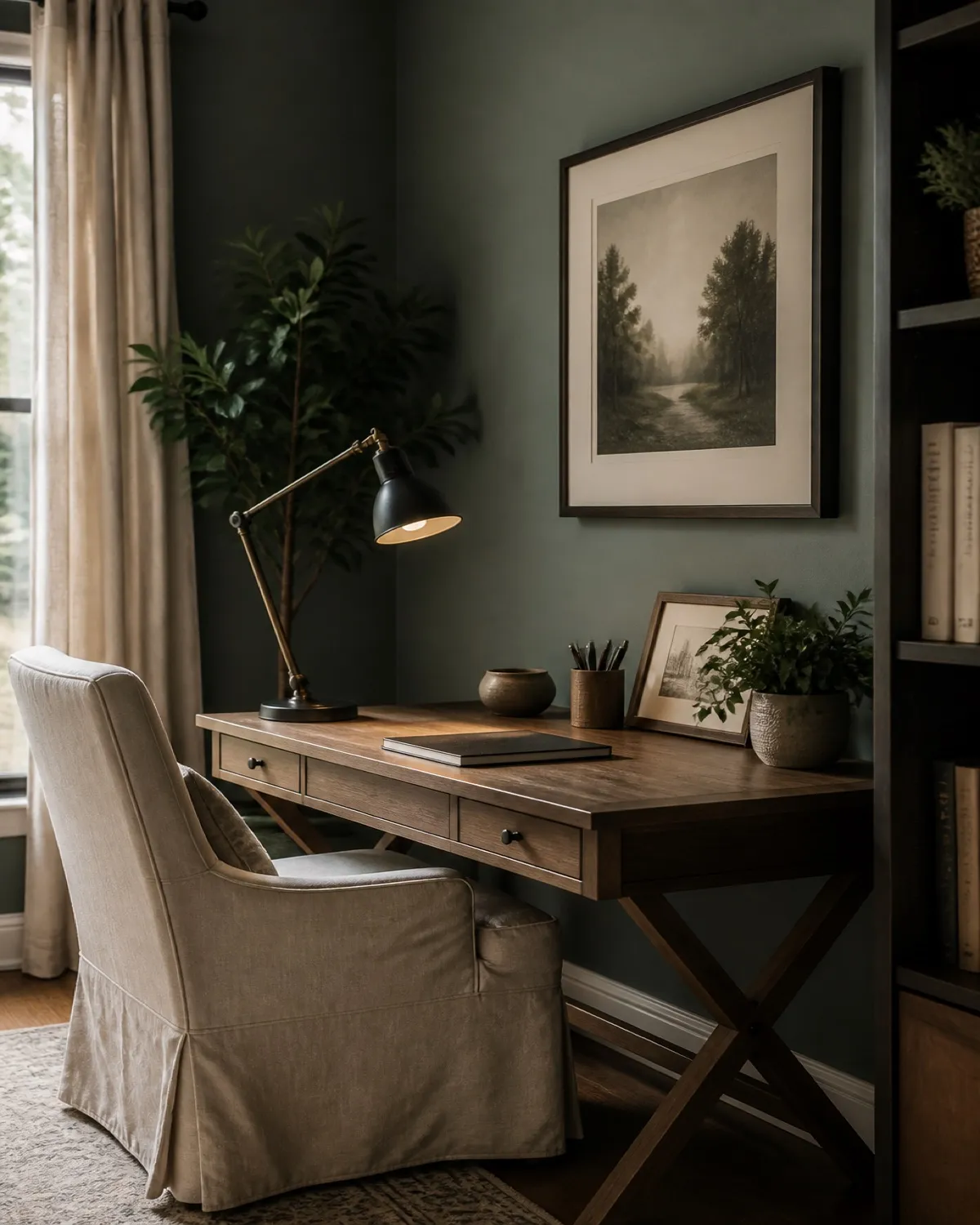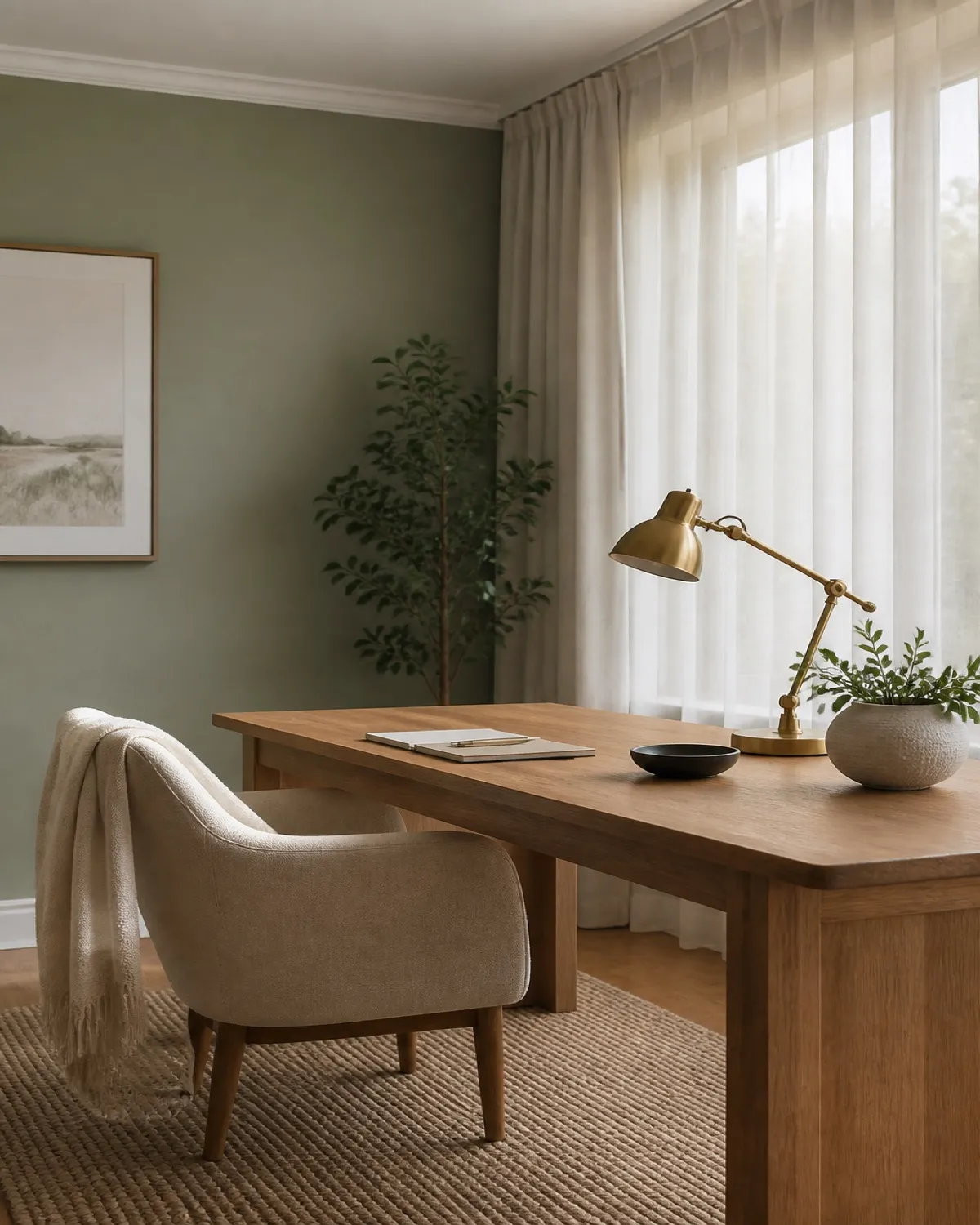
Beautiful Home Office Setup Ideas
Beautiful home office ideas that balance focus and style — desk placement, lighting, cables, and storage.
A beautiful home office setup should do two jobs at once: help you focus, and still feel like part of a home — not a leftover corner of guilt. Nestlyra’s approach favors calm materials, clear surfaces, and lighting that supports long sessions without looking clinical.
This guide covers desk placement, task light, storage, cable management, and the finishing layers that make a workspace photograph-worthy. For a shorter foundation, see a focused home office without the sterile look. For systems that quiet visual noise, pair with quiet organization ideas.
What makes a home office “beautiful”
Beauty here is not décor piled onto a desk. It is hierarchy: one clear work surface, one primary light, closed storage for paper chaos, and a material story that matches the rest of your home. When the setup is edited, productivity and style stop competing.
If you share the room with sleep or living, define a hard stop at day’s end — laptop closed, tray cleared — so the beautiful setup does not colonize the whole home.
Desk placement and layout
1. Face a calm view when you can
A window, a soft wall, or a simple art piece beats staring into a closet door. Daylight improves mood; a calm backdrop improves video calls and daily outlook.
2. Avoid putting your back to the room’s entrance if it unsettles you
Some people concentrate better with a solid wall behind them; others feel trapped. Choose the orientation that lowers your shoulders, not the one that only looks good in photos.
3. Keep the primary work triangle tight
Keyboard zone, writing pad, and most-used tools should live within an easy reach arc. Stretching across a wide “styled” desk creates fatigue and invites clutter to fill the gaps.
If dual monitors actually need extra width, keep the work triangle on one side and leave the rest empty. A long desk is only beautiful when the extra plane is not a second inbox.
4. Leave a landing strip at the edge
A clear 8–12 inch zone for coffee, notebook, or incoming mail prevents the whole surface from becoming a catch-all. Beauty needs a border.
5. Float the desk only if circulation survives
A desk in the middle of a room can look architectural — until pathways collapse. If floating, ensure you can open drawers and walk behind without turning sideways.
Lighting for focus and atmosphere
6. Make task light non-negotiable
A directional desk lamp on the opposite side of your writing hand reduces shadows. Beauty follows function: eye comfort is part of a well-designed setup.
For dual monitors or video calls, clamp a wide, soft panel to the desk edge so it can fill the page and your face — without a lamp base in the middle of the composition.
A dual-monitor desk can use one wide, hinged head instead of a second lamp. Sit the base behind the screens so the composition stays lamp-optional on the writing plane, and fold the outer bars to wash both the page and a little of the wall.
7. Layer a second, softer source
Ambient light from a floor lamp or wall wash keeps the room from feeling like a cave around a bright screen. Warm bulbs help the office feel residential after hours.
A 53.7-inch LED corner lamp in black can do that second layer without another object on the desk. This Govee RGBIC model is listed at up to 1,000 lumens and is meant for corners and small spaces — use it as dim ambient during work, not as task light.
8. Match screen brightness to the room
A glowing rectangle in a dark corner looks harsh and drains style. Balance monitor brightness with ambient light so the setup feels composed on camera and in person.
9. Hide glare on calls
Test your backdrop on video. A window directly behind you may look dramatic and also turn you into a silhouette. Side light or soft front fill is kinder.
Surfaces, chairs, and ergonomics that still look styled
10. Choose a chair you will use — then soften the look
Support matters more than silhouette. If the chair feels office-cold, add a textured throw or choose a cover in a home-friendly textile. Beauty includes the body staying comfortable past hour two.
11. Keep the desktop mostly closed-storage adjacent
Trays are useful; open cups of pens rarely are. Prefer a shallow drawer or lidded box for daily tools so the desk can photograph clean without a twenty-minute reset.
A desk with drawers built in is the same rule in one piece: paper and supplies leave the work plane, and the room still reads as furniture, not a supply closet.
12. Use a monitor arm or stacked stand to reclaim surface
Elevating the screen frees desk landscape for a lamp, notebook, and negative space — the ingredients of a beautiful setup.
Clamp the arm to the desk edge so the stands disappear. Dual screens share one base; an ultrawide gets a single arm. Hide cords in the channel so the composition stays lamp and paper, not a forest of posts.
One large or curved display can use a single arm instead — still off the desktop, with USB in the base so a phone does not need a second charger in the landing strip.
A stacked stand still works when you cannot clamp — two matching risers lift dual screens and hide pens in the drawers so the composition stays lamp, notebook, and negative space.
When the laptop is the display, a low-profile riser does the same lift. Pair it with a slim keyboard so the machine sits at eye height and the desk still photographs as lamp, notebook, and negative space.
13. Align edges like a composition
Monitor, lamp, and notebook pad should share a quiet geometry. Random diagonals look temporary even when equipment is expensive.
Storage and paper calm
14. Give paper a single home
One inbox tray. One archive box or drawer. Multiple “temporary” piles destroy both focus and aesthetics. For broader home systems, see quiet organization.
15. Prefer closed cabinets over open cube walls
Open shelves fill with visual noise in workspaces. Closed doors protect the beautiful desk you just cleared.
16. Vertical files beat horizontal sprawl
Tall narrow storage uses wall volume and keeps floor paths open — especially valuable in spare-bedroom offices.
17. Label lightly and consistently
If labels help your household, keep typography quiet. Invisible systems are ideal; gentle cues beat sticky-note chaos.
Cables, tech, and the invisible layer
18. Treat cable management as décor
A single sleeve, adhesive clips, and a grounded power strip under the desk do more for beauty than another sculptural object on top.
One GaN hub under the lip can replace the brick pile: AC for the lamp and monitor, USB-C for the laptop. Keep any indicator glow below the desktop so it never joins the video backdrop.
19. Corral chargers in one dish or dock
Phone cables draped across the work zone make even styled desks look unfinished. One dedicated charging corner keeps the primary surface sacred.
A recessed power strip at the far edge of the desk does the same job without a second dock on the writing zone. Dual monitors can share one quiet line; the phone and lamp charge off-stage.
If the laptop still arrives with a nest of dongles, one dock at that same edge replaces the pile. Monitors, power, and the phone share one vertical station instead of a styled tangle.
20. Silence notification clutter physically
A small closed box for secondary devices during deep work is a design choice as much as a productivity hack — fewer glowing rectangles, calmer composition.
Finishing touches that feel like Nestlyra
21. Add one living element
A plant or a simple vase with branches softens rectangles of screens and paper. Keep scale modest so leaves do not fight the task lamp.
22. Choose art that does not compete with concentration
A quiet print or textile behind the desk can elevate video backgrounds without becoming a busy mural. Leave margin; do not wallpaper the work wall with sticky inspiration.
23. Keep a material story short
Wood desk, linen or soft chair textile, ceramic or metal lamp — then stop. Mixing every trend finish makes a home office look like a tech fair booth.
For a restrained material philosophy that translates well to workspaces, browse quiet luxury at home.
24. Soften acoustics if the room echoes
A rug under the chair zone, curtains, or a fabric pinboard reduces harsh sound and makes the room feel more finished — especially on calls.
25. Close the office with a ritual
Tray for active papers, laptop shut, lamp off. A beautiful setup stays beautiful when the day has a visible ending.
Explore more workspace inspiration in Nestlyra’s home office category.
Common mistakes in home office setups
Styling the desk before solving light and cables. Pretty trays cannot fix glare or wire nests.
Using the bed or dining table as a permanent office. Without a defined zone, neither rest nor work gets a clear signal.
Open shelving packed with supplies. Utility on display reads as clutter, even when organized.
Ignoring chair comfort for aesthetics. A beautiful room you avoid is a failed setup.
Too many accent colors and gadgets. Restraint photographs better and thinks clearer.
No landing place for incoming paper. Mail and printouts will colonize the desk without an inbox.
FAQ
How do I make a home office look beautiful in a small space?
Choose a compact desk with closed storage nearby, mount task light, manage cables, and keep the surface to lamp + notebook + negative space. Vertical storage beats wide sprawl.
What lighting is best for a beautiful home office setup?
A warm directional task lamp plus soft ambient light. Avoid relying only on overhead fixtures or only on screen glow.
Can a home office feel cozy and still look professional on camera?
Yes. Soft textiles, calm art, warm light, and a cleared backdrop read as both welcoming and competent. Avoid busy shelves directly behind your seat.
How often should I reset my desk?
Daily for the work surface; weekly for drawers and cable checks. Beautiful setups are maintained in minutes, not restored in hours.
What should I buy first for a better home office?
Task lighting and a supportive chair, then cable management, then storage. Decorative objects come last.
How do I keep work from taking over my home?
Give tools a closed home and a shutdown ritual. If the office shares a bedroom, pack visible tech away at night so sleep can reclaim the room.
Conclusion
Beautiful home office setup ideas succeed when focus and feeling share one plan: smart placement, kind lighting, closed storage, invisible cables, and a short list of finishing textures. The goal is a desk you want to sit at — and a room you are still happy to see when the workday ends.
Start with light and surface calm. Then store, soften, and stop decorating before the desk becomes a display. Browse more ideas in Nestlyra’s home office section, or return to focused home office fundamentals when you need a simpler checklist.
Save for later
Pin this idea
Designed for Pinterest — tall visuals, clear titles, and room ideas you can revisit when you decorate.