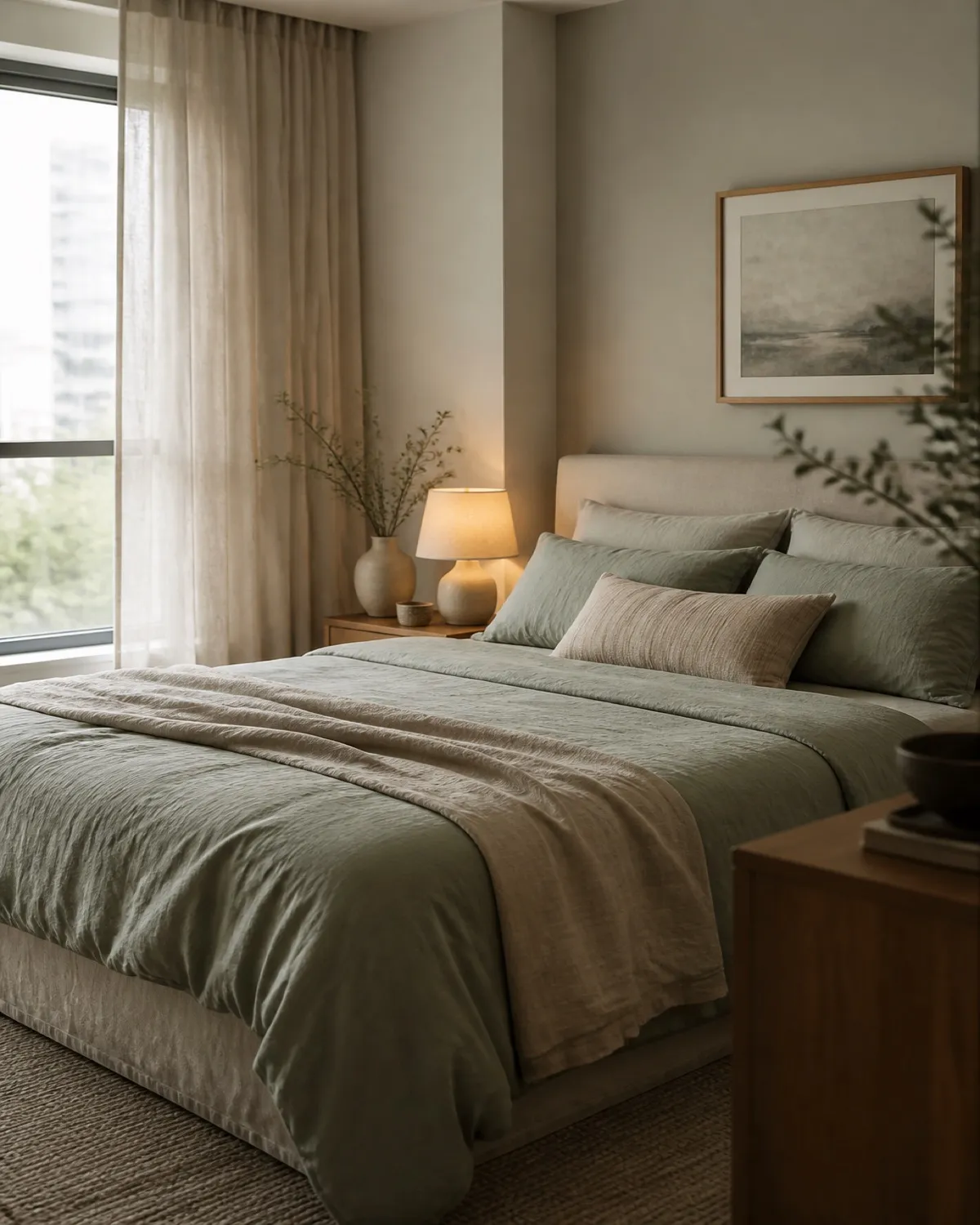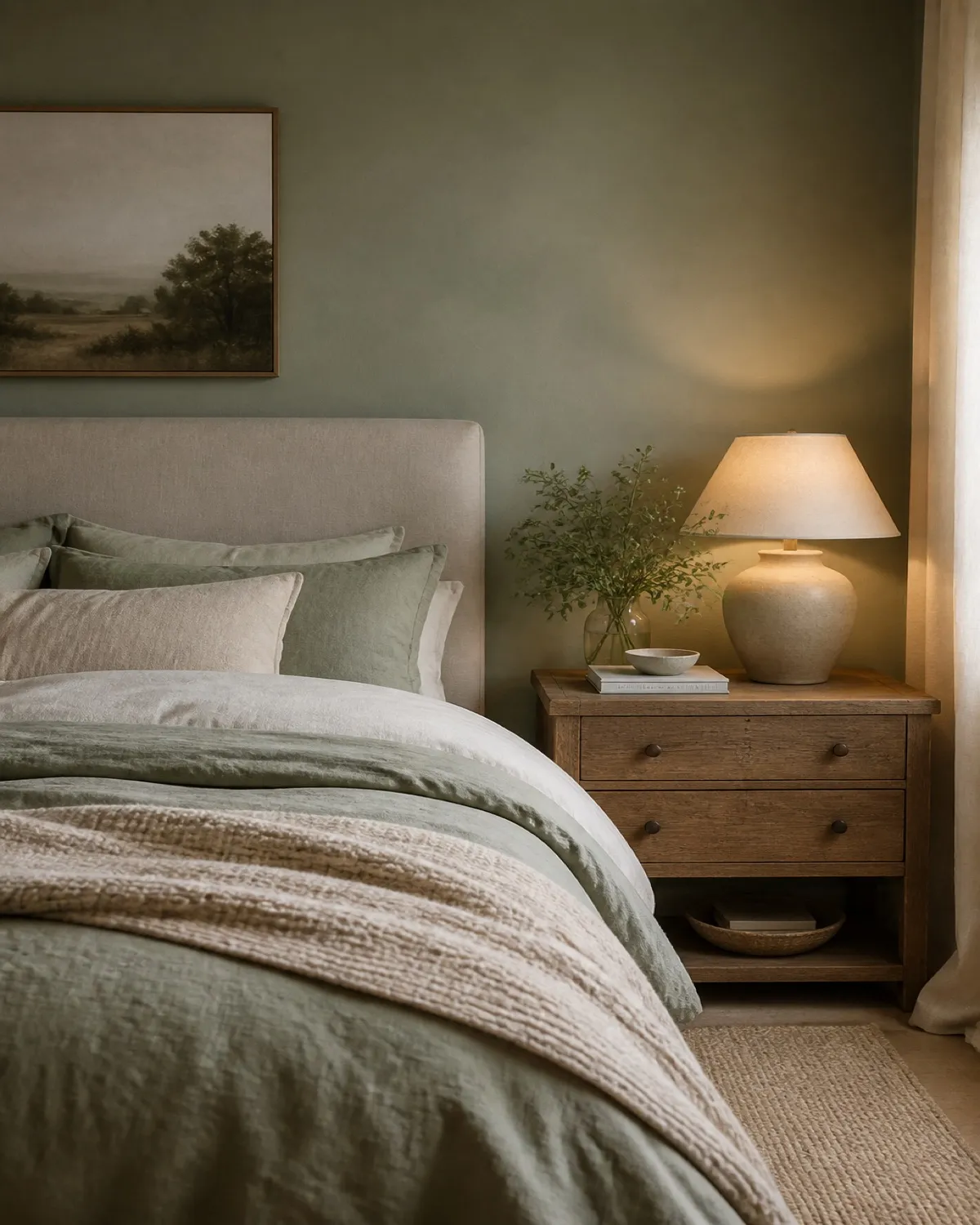
Create a Calm Bedroom Sanctuary
Turn your bedroom into a restorative sanctuary with layered light, a quiet palette, breathable textiles, and surfaces that stay edited.
A restful bedroom is less about matching sets and more about rhythm: light that lowers at night, fabrics that invite touch, and surfaces that stay mostly clear.
That rhythm is what turns a decorated bedroom into a sanctuary — a room you want to return to, not a room you have to tidy before you can rest. This guide is for renters and owners who want a sleep space that photographs calmly and works on ordinary weeknights. The work is sequential: light first, then color, then textiles, then the small surfaces that either protect the mood or unravel it.
If your room is compact, pair this foundation with our 25 cozy bedroom ideas for small apartments. For a dedicated lighting plan — lamps, dimmers, sconces, and a nighttime sequence — see 15 bedroom lighting ideas that feel cozy and expensive. If you want fewer objects and a stricter edit, continue with minimalist bedroom decor ideas. For a material-first companion, see quiet luxury at home.
What a bedroom sanctuary actually is
A sanctuary is not a spa replica, and it is not an empty white box. In Nestlyra’s view, it is a bedroom with a clear job: support rest. Every visible piece should help you wind down, hold what you use weekly, or add calm through texture and light. Decoration that asks for attention — novelty pillows, a gallery wall of small frames, a chair that only holds laundry — works against that job.
The rooms that feel restorative share a few traits you can copy without a renovation:
- One quiet field of color instead of several competing stories
- Light that can dim, rather than a single bright ceiling fixture
- Textiles you want to touch, stacked in a simple order
- Surfaces with empty space on purpose
- A short ritual that puts the room back together before sleep
You do not need new furniture to start. Most sanctuaries are built by subtracting glare, clutter, and visual noise — then adding warmth in the right places.
Start with light, not furniture
Overhead fixtures flatten a room. A single ceiling downlight makes walls look harder, shadows look sharper, and the bed look like a stage. Begin with three softer sources instead: a bedside lamp, a low corner lamp or wall sconce, and optional window sheers that diffuse daylight.
Keep bulbs in a warm range (around 2700K). Cool white (4000K and up) reads as office light; mixed color temperatures in the same room make linens look dingy and the atmosphere restless. The goal is a gradual dimming of the day — not a spotlight on the bed.
How to layer it in a real room:
- Bedside glow. One lamp on each side of the bed, or a pair of wall sconces if nightstands are small. Fabric or ceramic shades diffuse light; exposed bulbs and clear glass shades often feel too sharp for sleep.
- A second low source. A floor lamp in a corner, a picture light, or a dim sconce on the dresser wall. This is the light you use while getting ready so the bed is not the only bright object.
- Daylight control. Sheer curtains soften glare; a separate blackout layer (or lined drape) lets the room go dark when you need it. Hang rods close to the ceiling so fabric reads as a tall, calm column.
If you already have a ceiling fixture, you do not have to remove it. Swap the bulb to warm white, add a dimmer if your lease allows, and treat overhead light as daytime-only. At night, leave it off.
Nestlyra tip: Put lamps on a simple wind-down sequence. Overhead off after dinner, corner lamp on while you read in the room, bedside lamps only in the last half hour. The body learns the order faster than any new furniture can teach it.
A matching pair of ceramic bedside lamps is a practical way to start that dimming from both sides of the bed, without relying on a single overhead fixture.
If nightstands are small, or you want the head wall to glow instead of the tabletop, a pair of up-and-down sconces can be the bedside layer. Set them to warm white and keep the beams on the wall, not in your eyes.
Once the light can lower, color has somewhere to land. Harsh overhead light will fight even the quietest palette; warm, layered glow lets stone, oat, and sage read as soft instead of flat.
Choose a quiet palette
Pick one dominant neutral and one supporting tone. Soft stone, warm white, and muted sage keep the eye calm. Save stronger color for a single pillow or a ceramic lamp base.
A sanctuary palette is low-contrast on purpose. High-contrast schemes — stark white with black furniture, or a bold accent wall — can look graphic and alert. Sleep rooms usually feel better when neighboring values sit together: linen against plaster, oak against taupe, sage against warm white. Depth then comes from finish (matte next to a slight sheen) more than from loud pigment.
Three palettes that hold up in real bedrooms:
- Stone and oat. Warm white walls, oatmeal bedding, a natural wood nightstand, one charcoal or clay object.
- Misty sage. Soft sage on a textile or lamp, stone walls, cream sheets, unlacquered or brushed metal in one finish only.
- Clay and cream. Cream walls, a terracotta or dusty-rose throw as punctuation, pale wood, no competing jewel tones.
If your lease forbids paint, build the field with the largest textiles you already control: duvet, curtains, and rug. Matching those three in related tones does more for calm than a new accent chair in a fourth color.
Watch undertones. A cool gray duvet against creamy walls will look slightly dirty; a blue-white sheet against warm plaster will look clinical. Hold fabrics together in the room’s actual light before you commit. Ceiling and trim should stay in the same family as the walls so corners dissolve instead of outlining the box.
For compact rooms, a continuous quiet field also makes the space feel larger — the same principle we use in small-apartment bedroom ideas. The sanctuary version is simply stricter: fewer accents, more related tones.
One metal finish is usually enough punctuation. A gold-framed wall mirror above a dresser can bounce lamp glow and daylight back into the room — as long as it reflects a calm vignette, not a cluttered closet.
Layer textiles with intention
Stack weight carefully: a breathable sheet, a mid-weight coverlet, and a folded throw at the foot. Mix one smooth weave with one nubby texture so the bed feels editorial without looking styled for a catalog alone.
Textiles are the fastest way to change how a bedroom feels, because you meet them with your skin. A sanctuary bed is not eight pillows and a patterned quilt. It is a short stack you can actually make in the morning.
A practical layering order:
- Sheets in washed cotton, linen, or a linen blend. Breathable fabric matters more than thread-count bragging. White, cream, or stone keeps laundry simple and the field quiet.
- A mid-weight coverlet or quilt that can live on the bed year-round. This is the layer you see most of the day, so choose a calm weave over a loud print.
- A folded throw at the foot — wool, cotton, or a nubby knit. One is enough. It adds weight for cooler nights and a finished edge without a second duvet pooling on the floor.
- Pillows with a job. Two sleeping pillows, plus one lumbar or one textured sham if the bed looks unfinished. Extra Euro shams are optional in a large room and usually visual clutter in a small one.
If you want that quiet white field as a complete matching set, a queen 4-piece in polyester microfiber is an easy-care option — not the same hand as linen, but a solid, washable first layer with deep pockets for mattresses up to around 16 inches.
Zippered cotton protectors under the two sleeping pillows keep that short stack washable. The sham stays the visible layer; the protector is the one that actually meets the pillow.
The rest of the room should follow the same logic. One generously sized rug under the bed (ideally extending 18–24 inches beyond the sides) softens hard floors and unifies the sleeping zone. Curtains in a related tone — not a competing pattern — add acoustic softness in hard-walled rentals and make the window feel considered.
A 6-by-9 washable rug in abstract slate grey is a practical choice for that under-bed field: one textile, related to a quiet palette, without a precious fiber you are afraid to walk on at night.
Nestlyra tip: If the bed still looks “thin,” add texture, not pattern. A linen duvet over cotton sheets, or a wool throw over a cotton coverlet, reads as expensive because the hand-feel is visible. Busy florals and large geometrics ask the eye to keep working after you wanted it to stop.
An upholstered headboard, hanging tapestry, or quilted panel on the head wall does extra work in echoey apartments: it absorbs sound and gives the bed a clear anchor. Keep the textile large. Many small pillows against a tiny headboard look busy, not lush.
For a fuller compact-room checklist, see our 25 cozy bedroom ideas for small apartments. For a quieter luxury approach to materials — linen, wool, honest timber — continue with quiet luxury at home.
Color and cloth set the mood. The nightstand decides whether that mood survives until morning.
Clear the nightstand
Leave room for a book, water, and one beautiful object. Baskets on the lowest shelf hide chargers and keep the horizontal plane serene — especially important for Pinterest-worthy photos and real mornings.
Clutter expands psychologically. A lamp, a stack of mail, two charging cords, lotion, glasses, and last night’s mug reads as unfinished work, not as a life well lived. The Nestlyra edit is simple: three objects on top. One light, one personal object, one practical item. Everything else gets a drawer, a lower shelf, or leaves the room.
What belongs out of sight: extra chargers, bottles, medications, hair ties, and the “I’ll deal with it tomorrow” pile. What can stay visible: a lamp, a book or glass of water, and one object with meaning — a small ceramic, a frame, a stone. If you need the phone nearby, it should charge without colonizing the surface.
A matching pair of nightstands with closed drawers makes that edit easier: the same silhouette on both sides of the bed, and a place for chargers that is not the tabletop.
If you want a warmer wood piece that charges the phone without a tangle of cords, look for a nightstand with outlets on the tabletop and a place for extras to disappear.
If both sides of the bed are in play and you want charging on a matching black pair, look for closed drawers and stainless-steel feet so the silhouette stays even and a little floor still shows.
Symmetry is useful, not mandatory. If one side of the bed is against a wall, a single well-chosen table plus a sconce is calmer than a forced pair. What matters is that the horizontal plane stays edited — and that cords have a destination other than a knot on the floor.
The same rule applies to the rest of the room. A sanctuary fails when the nightstand is perfect and the chair, dresser top, and closet floor are not.
Give clutter a home that is not the bed
The bed should not be a folding table, a laundry basket, or a desk. If clothes land there every evening, the room never quite becomes a sanctuary, no matter how beautiful the lamp is.
Give those rituals a dedicated place:
- A dressing ledge or two hooks near the closet for tomorrow’s outfit and tonight’s jeans. Wall hooks beat a “statement chair” that only collects fabric.
- Closed dresser storage for what you use weekly. Open bedroom shelves invite objects to multiply; a closed chest keeps the visual field quiet. For systems that reduce noise without looking severe, see quiet organization.
- Under-bed drawers or low bins for extra linens and off-season clothes — as long as they do not peek out and undermine a bed with visible legs.
- A tray or shallow dish on the dresser for jewelry and keys, so those items do not migrate to the nightstand.
A wide dresser with many closed drawers is what makes that list stick: clothes disappear, the top stays at lamp, art, and one object, and charging can live on the dresser instead of the nightstand.
Walk the path from door to bed and bed to closet. If you turn sideways, the layout is fighting the sanctuary. Negative space is a decorating material; protect it as carefully as you choose paint.
When circulation allows, an upholstered bench at the foot of the bed can be that landing place: the throw folds there, tomorrow’s clothes sit there, and the duvet stays clear.
Finish with scent and sound
A linen spray, a quiet fan, or soft instrumental playlists cue the body that the room is for rest. Consistency matters more than novelty.
These are the invisible layers. They cost little and they work because the nervous system likes repetition. Choose one scent family and stay with it — washed linen, cedar, or a quiet herbal note — rather than rotating novelty candles. A room that smells different every week never becomes a cue.
Sound should be equally boring in the best way. A low fan, rain sounds, or the same short playlist tells the brain the day is closing. Avoid leaving a bright TV or a looping social feed as the last light in the room; screens keep the atmosphere “on” after the lamps have done their job.
Temperature belongs in this layer too. A slightly cooler room with an extra throw is usually more restful than a warm room with nowhere to adjust. If you share walls with a street or a kitchen, blackout curtains and a consistent sound cue do more than another decorative pillow.
A five-minute sanctuary reset, every night:
- Fold the throw and return extra pillows to their place (or skip extras entirely).
- Clear the nightstand back to three objects; chargers into the drawer.
- Clothes on the hook or ledge — not the chair, not the bed.
- Switch to warm lamps only. Overhead off.
- Start the same sound or scent you used last night.
That is the whole practice. Sanctuaries erode in the gap between a styled Saturday and an exhausted Tuesday. The reset closes the gap.
A sanctuary is not empty. It is edited.
Common mistakes that keep a bedroom from feeling restful
Starting with furniture instead of light. A new bed in a glare-lit room still feels like a showroom. Warm, dimmable sources change the atmosphere before any case good can.
Too many accent colors. Three “pops” become visual chatter. One punctuation piece — a sage lamp, a clay throw — is usually enough.
A catalog pillow landscape. Extra shams look lush in a loft and like storage overflow in most apartments. Coziness comes from fabric quality, not quantity.
Open storage for everyday mess. Styling books on the nightstand is fine. Styling chargers, vitamins, and mail is not. Closed drawers protect the edit.
Cool bulbs mixed with warm ones. Mixed color temperatures make the room feel unfinished and keep the brain slightly alert.
Using the bedroom as overflow. If it is not weekly-use or sleep-related, it belongs elsewhere. The sanctuary cannot also be the apartment’s attic.
Skipping the ritual. A beautiful room that is reset only on laundry day will not feel like a sanctuary by Thursday.
FAQ
How do I make my bedroom feel like a sanctuary without renovating?
Change light, textiles, and surfaces first. Swap to warm bulbs, add a second lamp, edit the nightstand to three objects, and stack a simple bed (sheet, coverlet, one throw). These moves do not require landlord approval and they alter how the room is experienced more than most furniture swaps.
What colors are best for a calm bedroom?
Soft warm neutrals and muted nature tones — stone, oat, sage, clay, cream. Keep contrast low between walls, large textiles, and the ceiling. Save stronger color for one object. Stark cold white and high-contrast black-and-white schemes can look crisp but often feel more alert than restful.
How many lamps does a bedroom sanctuary need?
At least two sources besides overhead: typically a pair of bedside lamps, or one bedside lamp plus a corner floor lamp or sconce. Three softer sources are the Nestlyra baseline. Overhead light can stay for daytime; it should not be the last light you switch off.
What should I keep on a nightstand?
One lamp (or a sconce), one practical item (book or water), and one personal object. Chargers, bottles, and extras belong in a drawer or on a lower shelf. If the phone must stay nearby, give it a dedicated charging spot that does not become a cord nest.
Can a small bedroom still feel like a sanctuary?
Yes — small rooms often become sanctuaries faster because there is less space for competing stories. Use a continuous quiet palette, a bed with some visible floor underneath if you can, layered warm light, and ruthless surface editing. See our small-apartment cozy bedroom ideas for layout-specific moves.
What is the first upgrade I should buy?
Lighting and bedding. A matching pair of warm bedside lamps and breathable sheets change atmosphere immediately. Furniture can wait until the room’s light and textile story feel right.
How do I keep the sanctuary feeling after I style it?
A five-minute nightly reset: fold the throw, clear the nightstand, put clothes on a hook, switch to warm lamps only, and repeat the same scent or sound. Consistency is what turns a styled room into a cue for rest.
Conclusion
Build the room you want to return to — then protect it from clutter creep with a weekly five-minute reset, and a nightly one if you can. A calm bedroom sanctuary is not a shopping list. It is a sequence: light that lowers, a quiet field of color, textiles you want to touch, surfaces that stay mostly clear, and a small ritual that puts everything back.
Start with one axis this week — bulbs and lamps, or the nightstand edit, or a simpler bed stack. Finish the reset tonight. Then add slowly. The rooms that feel most restorative are often the ones that refuse to hold anything that does not earn its place.
When you want a material-first companion, continue with quiet luxury at home. For a warmer, tighter edit, see minimalist bedroom decor ideas. Browse more room-by-room ideas in Nestlyra’s bedroom collection whenever you need a fresh pass.
Save for later
Pin this idea
Designed for Pinterest — tall visuals, clear titles, and room ideas you can revisit when you decorate.