Minimalist Bedroom Decor Ideas
Minimalist bedroom decor that feels warm, not sparse — calm color, fewer pieces, and restful editing habits.
Minimalist bedroom decor is often misunderstood as white walls, one plant, and nothing else. Done well, it is warmer and more human than that: fewer objects, better materials, and a clear hierarchy so the eye — and the nervous system — can rest.
In Nestlyra’s view, the goal is not austerity. It is a bedroom that looks finished at 7 a.m. without a styling session — because nothing temporary was invited to stay. That kind of calm supports better sleep and photographs with the quiet confidence of an interior magazine spread.
This guide treats minimalism as an editorial practice, not a shopping list. You will find ideas for color, furniture scale, lighting, textiles, and daily habits that keep the room honest. For a material-forward companion, read our quiet luxury at home style guide. For rest-first styling, see creating a calm bedroom sanctuary. For lamps, dimmers, and a nighttime setup without extra clutter, see 15 bedroom lighting ideas.
What minimalist bedroom decor really means
A minimalist bedroom is not empty. It is edited. Every visible piece has a job: support sleep, hold what you use weekly, or contribute calm through texture and light. Decoration, novelty art, and “just in case” furniture are the first things to leave.
Minimalism also is not the same as cold modernism. Soft linens, warm bulbs, and a single sculptural lamp can live inside a restrained palette. The restraint is in quantity and contrast — not in comfort.
Color and atmosphere
1. Choose one dominant neutral and protect it
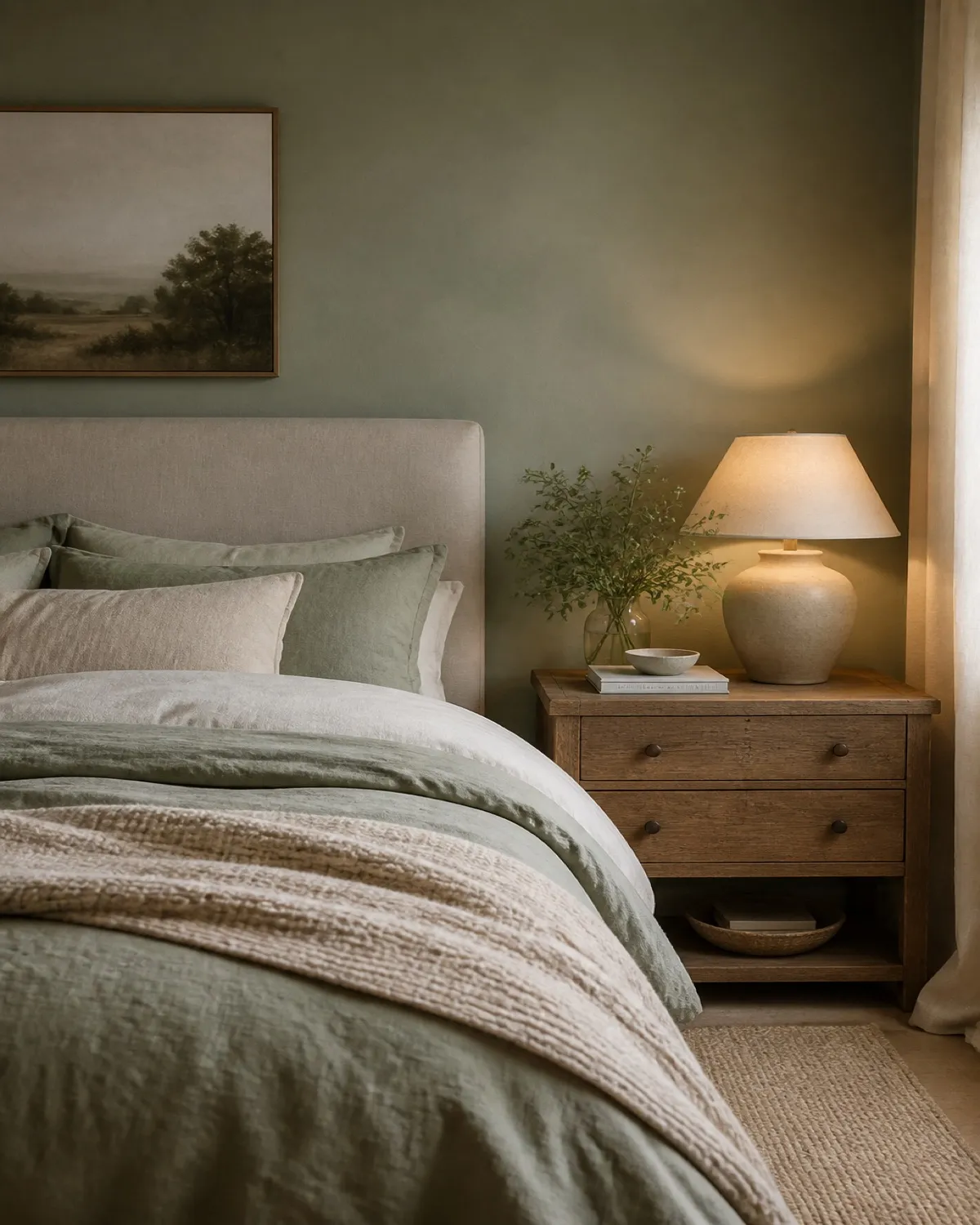
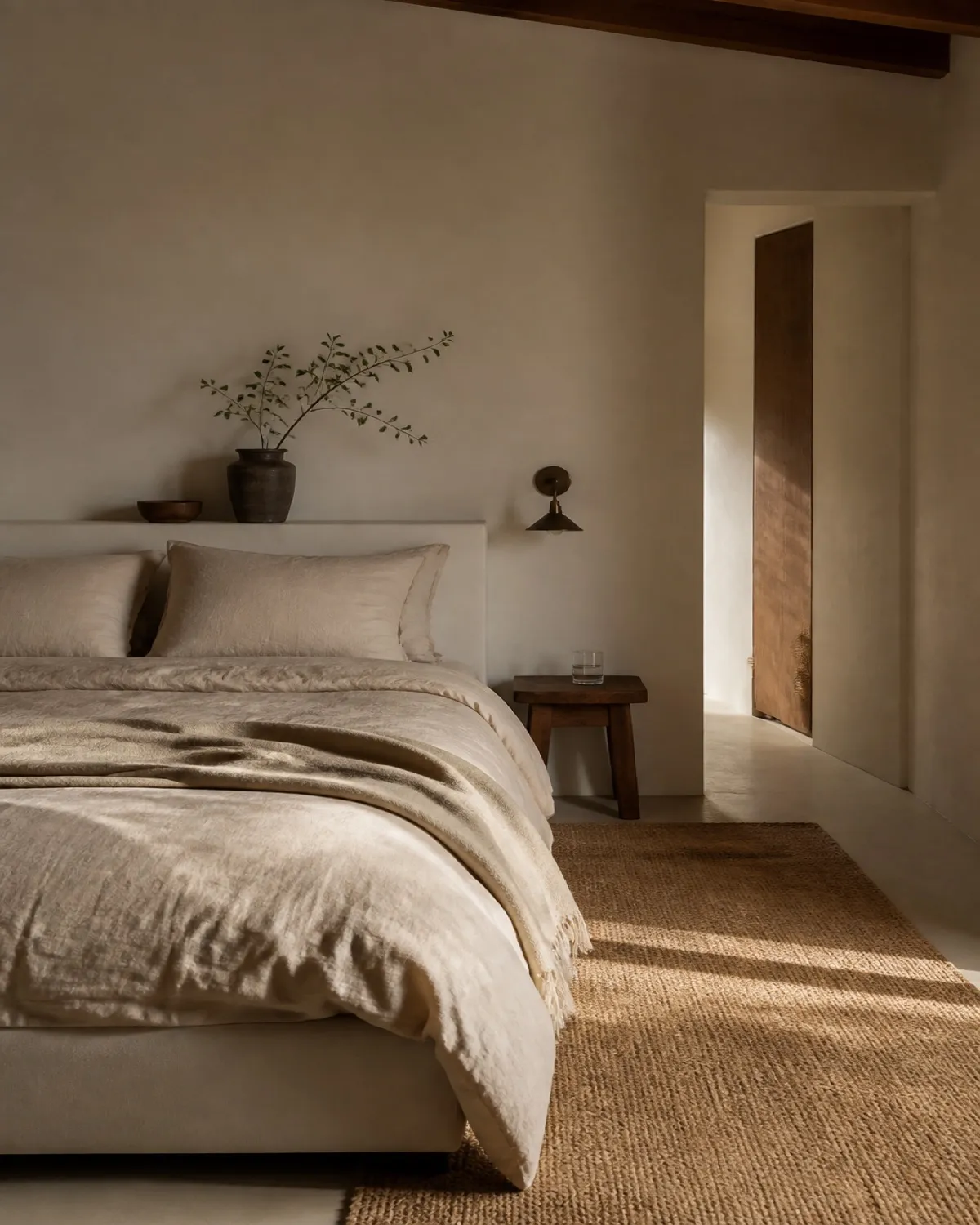
Pick a field color for walls and large textiles — warm white, stone, oat, soft clay, or muted sage — then let most surfaces orbit that choice. Minimal rooms fail when every wall and fabric introduces a new base tone.
2. Keep contrast gentle
High-contrast black-and-white schemes can look graphic and alert. For sleep, prefer neighboring values: linen against plaster, wood against taupe. Depth comes from finish (matte vs soft sheen), not from stark opposition.
3. Let the ceiling stay quiet
A dramatic ceiling color or busy molding story pulls attention upward in a way that can feel unfinished in minimal rooms. Keep the fifth wall simple so the bed remains the focal point.
4. Use color as punctuation, not paragraphs
If you want a deeper tone, place it once — a ceramic lamp, a single pillow, a throw fold. Repeated accents start to read as clutter, even when each item is beautiful.
Furniture: fewer pieces, clearer roles
5. Begin with the bed as the only hero
In a minimalist bedroom, the bed should be the largest, calmest composition. Scale the frame to the room; avoid ornate posts that add visual “columns” you do not need.
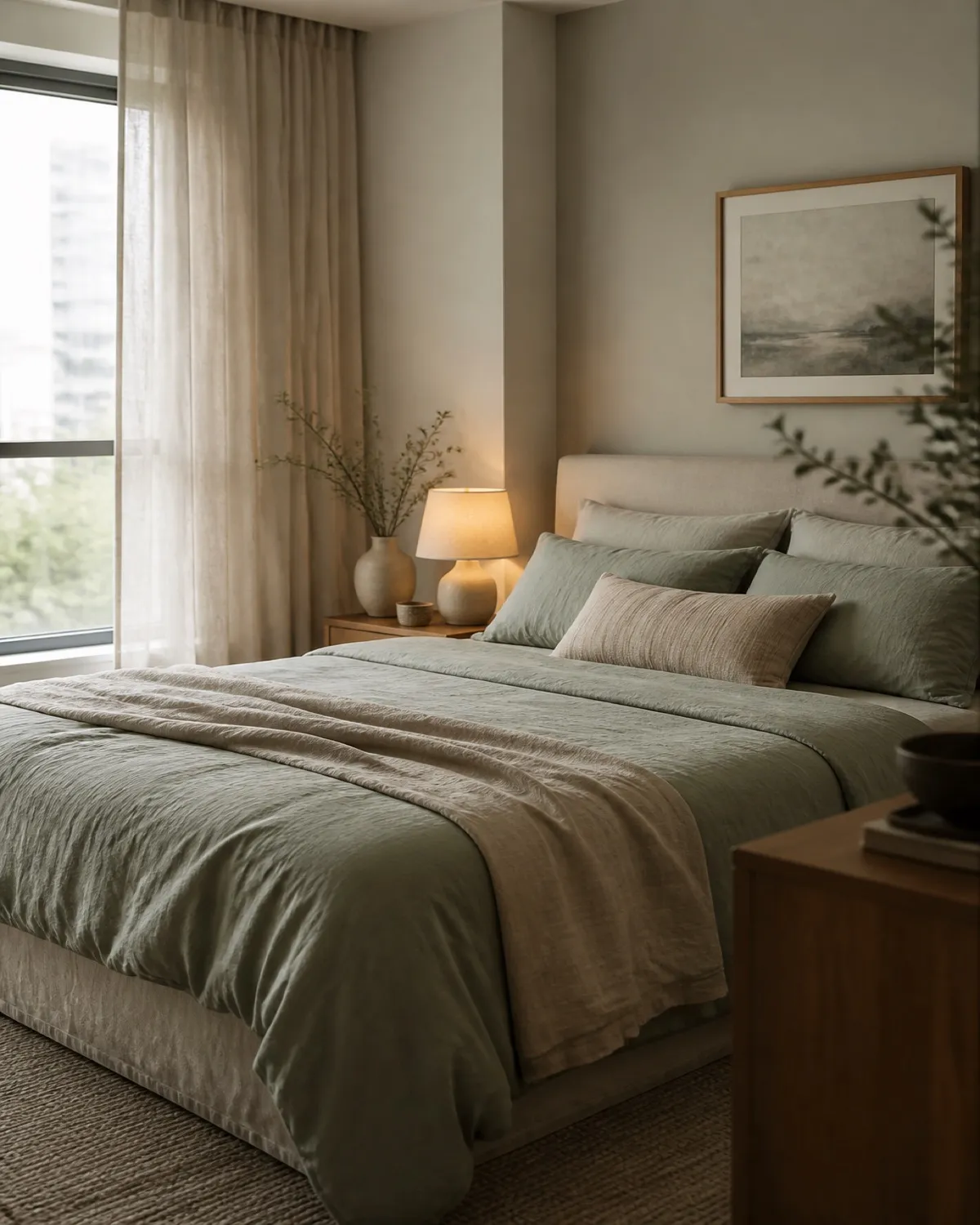
Think of bedding as architecture: continuous color from sheets to coverlet, with texture doing the storytelling. When the bed is settled, every other purchase becomes easier to judge.
6. Prefer legs and light over bulk
A bed or nightstand that shows floor underneath keeps the room feeling intentional and airy. Heavy, skirted bases can make minimalism look like unfinished storage.
7. One nightstand can be enough
Symmetry is optional. A single well-chosen table or wall shelf on the side you use most often is more minimal — and often more functional — than a forced pair.
If both sides of the bed are in use, a matching pair with closed drawers is quieter than two leftover tables. Charging on the tabletop keeps the phone from becoming a cord nest.
8. Choose closed storage over open display
Open shelves in a bedroom invite objects to multiply. A closed dresser or built-in wardrobe keeps the visual field clean. Minimalism is easier when mess has somewhere to hide.
If you love the look of stacked books, limit them to one tight stack on the nightstand — not a library ledge above the pillows.
9. Skip the decorative chair unless it earns daily use
The classic bedroom chair often becomes a clothing sculpture. If you do not sit there to read, replace it with two hooks and a calm floor.
10. Align furniture into a simple plan
Minimal rooms look composed when edges line up: dresser flush with a wall plane, bed centered on its wall, paths left clear. Random angles read as temporary even when furniture is expensive.
If your room is compact, pair these ideas with small bedroom space-maximizing strategies.
Lighting that softens restraint
11. Dim the overhead default
A bright ceiling fixture flattens texture and makes sparse rooms feel clinical. Use it as backup, not as the nightly mood.
12. Build a small triangle of warm light
Bedside glow, a corner or dresser lamp, and optional wall wash create depth without adding objects. Keep bulbs in a warm range so materials look inviting.
13. Choose one lamp silhouette and stop collecting
Multiple competing lamp shapes break the calm. One thoughtful form — ceramic, linen shade, simple metal — is enough punctuation.
14. Hide the cord story
Minimalism collapses when cables zigzag across plaster. Route cords, use a single tray, or switch to wall-mounted lighting where possible.
Textiles: the soft side of less
15. Invest in hand-feel, not print volume
Washed linen, crisp percale, or wool throws read as luxurious because of touch. Loud patterns ask for attention; quiet weaves reward presence.
Run a simple test: if a pattern still shouts from across the room after you squint, it may be too loud for a minimal sleep space. Soften with solid layers or replace with tone-on-tone texture.
A solid white queen 4-piece keeps that field quiet even if you are not buying linen. This listing is brushed polyester microfiber: matching fitted, flat, and two cases, no print.
16. Limit the pillow count
Two sleeping pillows and at most one soft accent keep the bed graphic and calm. A mountain of shams is the opposite of minimal — even in neutral colors.
Zippered cotton protectors under those two sleeping pillows do the maintenance job without adding another visible object.
17. Fold, do not drape endlessly
A throw folded at the foot looks edited. A throw permanently crumpled mid-bed looks like unfinished living. Minimal rooms need finishing gestures.
18. Match curtain simplicity to the palette
Unlined or softly lined panels in a near-wall tone enlarge calm. Heavy patterned drapery becomes another piece of furniture on the wall.
The floor should follow the same edit: one generously sized rug, not several leftover mats. A 6-by-9 in a quiet abstract grey keeps the sleeping zone as a single field.
Surfaces, art, and objects
19. Empty horizontal planes on purpose
Nightstands and dressers should show negative space. If every surface is “styled,” the room cannot breathe. Leave room for a glass of water and nothing else.
20. One artwork, well placed
A single frame or textile above the bed is stronger than a collage. Hang with intention relative to the headboard — not as an afterthought high on the wall.
21. Choose objects with material honesty
Wood, stone, ceramic, linen. Avoid clusters of tiny décor that require constant arranging. Minimalism prefers one object with weight over five with novelty.
22. Scent and sound count as decor
A consistent evening cue — linen mist, quiet fan, soft playlist — completes a minimal room without adding shelves. Ritual is invisible design.
Habits that keep minimalism alive
23. Use a one-in, one-out rule for the bedroom
New lamp, old lamp leaves. New throw, old throw moves to another room or donation. Without this rule, minimal bedrooms slowly become ordinary again.
24. Reset in five minutes at night
Clear the chair that is not a chair, fold the throw, return clothes to closed storage. Minimalism is maintained nightly, not achieved once.
25. Photograph monthly
A phone photo reveals visual noise your eyes forgive. If something appears that does not serve sleep or weekly use, edit it out.
Browse more restful rooms in Nestlyra’s bedroom collection, or soften a compact layout with our cozy small-apartment bedroom ideas.
Common mistakes in minimalist bedrooms
Confusing empty with finished. A room with bare walls and a thin duvet can feel neglected. Add texture and warm light before you declare the edit complete.
Going cold. Cool white bulbs and blue-gray walls can make restraint feel sterile. Warmth is allowed — even required — for sleep.
Leaving storage open. Baskets without lids and open cubes fill up. Closed fronts protect the philosophy.
Keeping “pretty clutter.” Candles you never light, books you never open, and trays of unused jewelry are still clutter with better aesthetics.
Buying a full furniture suite. Matching sets often introduce pieces you do not need. Choose individually against a measured plan.
Over-styling for photos. If the room only looks minimal after a 20-minute prep, the system is too fragile for real life.
FAQ
Can a minimalist bedroom still feel cozy?
Yes. Coziness comes from textiles, warm lighting, and soft acoustics — not from object count. A linen duvet and a single warm lamp can feel richer than a crowded “cozy” vignette.
What colors work best for minimalist bedroom decor?
Warm neutrals and muted earth tones — stone, oat, clay, soft sage — tend to support rest. Pure gallery white can work if textiles and wood add warmth.
How many decorative objects should I keep visible?
Aim for fewer than you think: often three to five intentional objects in the whole room, not per surface. If you cannot name why an object is there, it may not belong.
Is minimalist the same as Scandinavian or Japandi?
They overlap in restraint and natural materials, but minimalist bedroom decor is a broader editing philosophy. You can practice it with many cultural influences as long as quantity and contrast stay controlled.
Where should I start if my bedroom feels busy?
Start with surfaces and lighting. Clear nightstands, reduce pillows, warm the bulbs, then evaluate furniture. Many rooms look newly minimal after editing alone.
Does minimalism work in a small bedroom?
Especially well. Fewer pieces and closed storage free both floor and attention. See also our guide to maximizing space in a small bedroom.
Conclusion
Minimalist bedroom decor is the decision to let sleep be the main story. Calm color, a bed that leads, closed storage, warm light, and textiles with honest hand-feel create a room that feels intentional rather than incomplete.
Edit first. Light second. Soften third. Buy last — and only what survives the question: does this help me rest? When the answer is unclear, wait. Minimal rooms improve in the pause between decisions, not in the rush to fill a blank wall.
When you want adjacent inspiration, continue with quiet luxury at home or explore more ideas in the bedroom section.
Save for later
Pin this idea
Designed for Pinterest — tall visuals, clear titles, and room ideas you can revisit when you decorate.